


Inside UO’s Transformative Teacher-Preparation Pathway
With a unique 4+1 model, hands-on classroom experience, and donor-funded scholarships, UO’s Educational Foundations program is shaping the next generation of public-school teachers
Story by Korrin Bishop
Photos by Andy Nelson
For students who feel called to teach, the path often begins with a sense of purpose, an instinctive belief in the power of learning, community, and possibility. At the University of Oregon, the Educational Foundations (EdF) program offers these future educators something invaluable: a place to explore that calling deeply, thoughtfully, and with the kind of mentorship that shapes long, meaningful careers.
Today’s classrooms are full of joy, complexity, and need. Students in the EdF program understand the field’s challenges, yet they choose the profession anyway.
“I think teacher education is a really hopeful space,” said Alison Schmitke, PhD, the undergraduate degree program director for the EdF major. “We have so many wonderful students who still want to teach, even knowing how hard it is.”
Schmitke has been part of the UO College of Education since 2008, joining to help implement what has become one of the university’s most impactful pathways into teaching. Before that, she was a high school social studies teacher in Alabama and Oregon, work that shaped her deep commitment to developing future educators.
Her decades of classroom and teacher-education experience have helped build a program where students are challenged, supported, and inspired in equal measures. She describes EdF as a “live project,” one that continues to evolve to meet the changing needs of schools and teachers.
A Unique Path with Depth and Flexibility
One of the EdF program’s strengths is its distinctive structure. Unlike traditional undergraduate teaching programs, EdF is not a licensure program. Instead, it’s a “4+1” pathway: students spend their undergraduate years immersed in the study of education and then complete their licensure year through UOTeach or another accredited program. This allows students to dive deeply into the forces that shape schooling, long before they step into their own classrooms.
“The flexibility of not being an undergrad licensure program lets us deep dive into the social, cultural, political, and historical contexts of teaching and learning,” Schmitke explains. “By the time they reach their graduate year, our students are so ready to learn the ‘how’ of teaching because they’ve already built such a strong foundation.”
Students can pursue the EdF major if they intend to teach elementary grades or choose the EdF minor to complement a subject-area major for secondary teaching. Either way, they graduate with a sophisticated understanding of how learning happens and how to create inclusive, responsive classrooms for children and adolescents.
Support Systems that Shape Futures
An important support for EdF students is the Logan Scholarship, established by the late Jane and Roscoe “Rock” Logan to assist students who face financial barriers as they pursue degrees to teach in public schools. Each year, this fund supports nearly 100 UO undergraduates.
Incoming first-year pre-education majors receive $6,000 annually, distributed evenly across fall, winter, and spring terms—support that often determines whether students can prioritize their studies, participate in fieldwork, and remain enrolled full-time. The Logan family’s commitment also extends to future teachers in graduate programs: each year, a College of Education panel selects ten UOTeach and Special Education students to receive $12,000 awards, helping them complete their licensure pathways and enter the classroom with confidence.
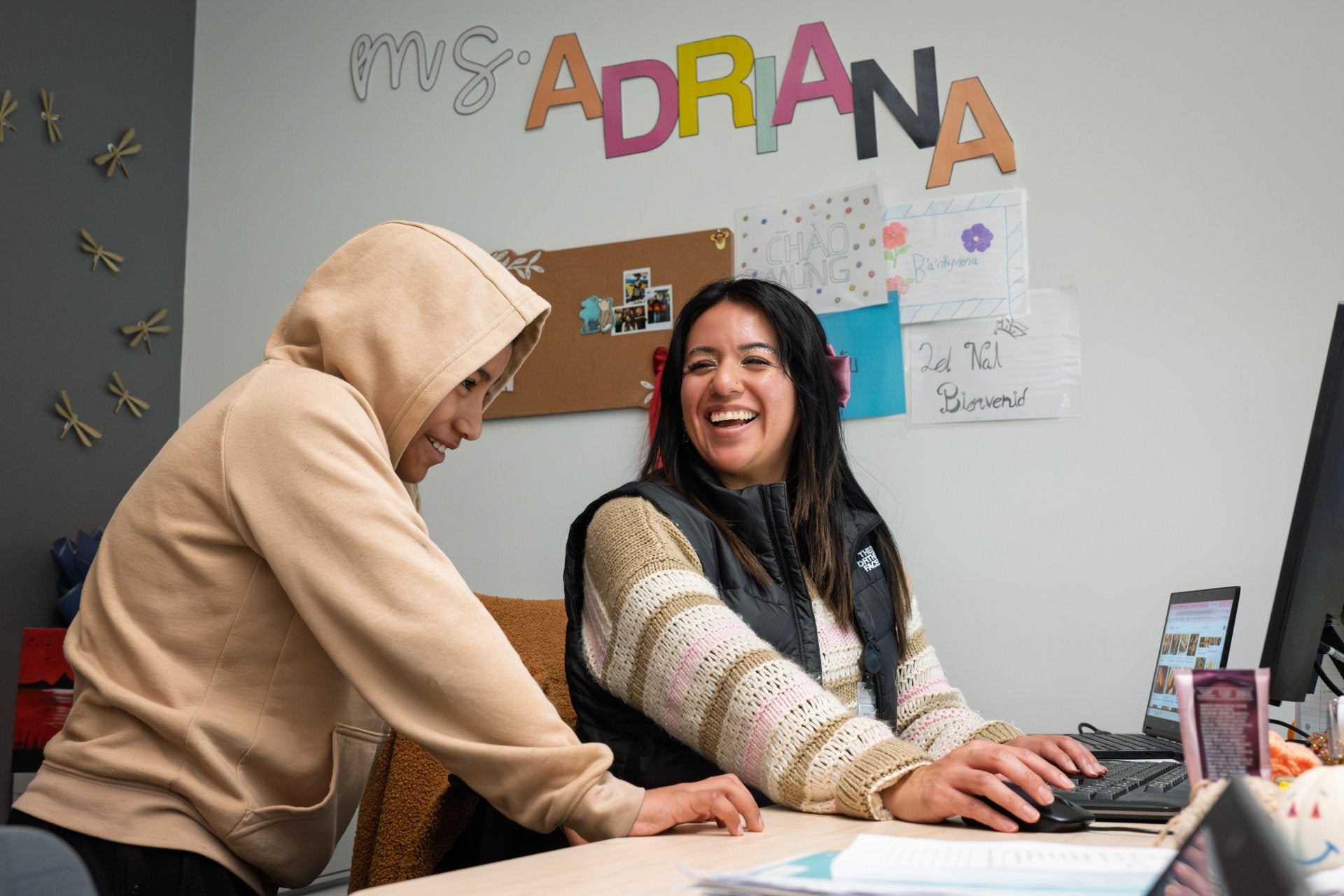
For alumna Adriana Alvarez, MS ’22, the Logan Scholarship was transformative. A first-generation college student, Alvarez completed her master’s degree in Curriculum & Teaching Education before becoming an English Language Development and Spanish teacher at Cascade Middle School in Eugene, part of the Bethel School District.
“What drew me to education was wanting to make a difference,” she said. “I wanted to be the representation I needed growing up, and it had always been a dream of mine to attend the UO.”
Creating a Community in Education
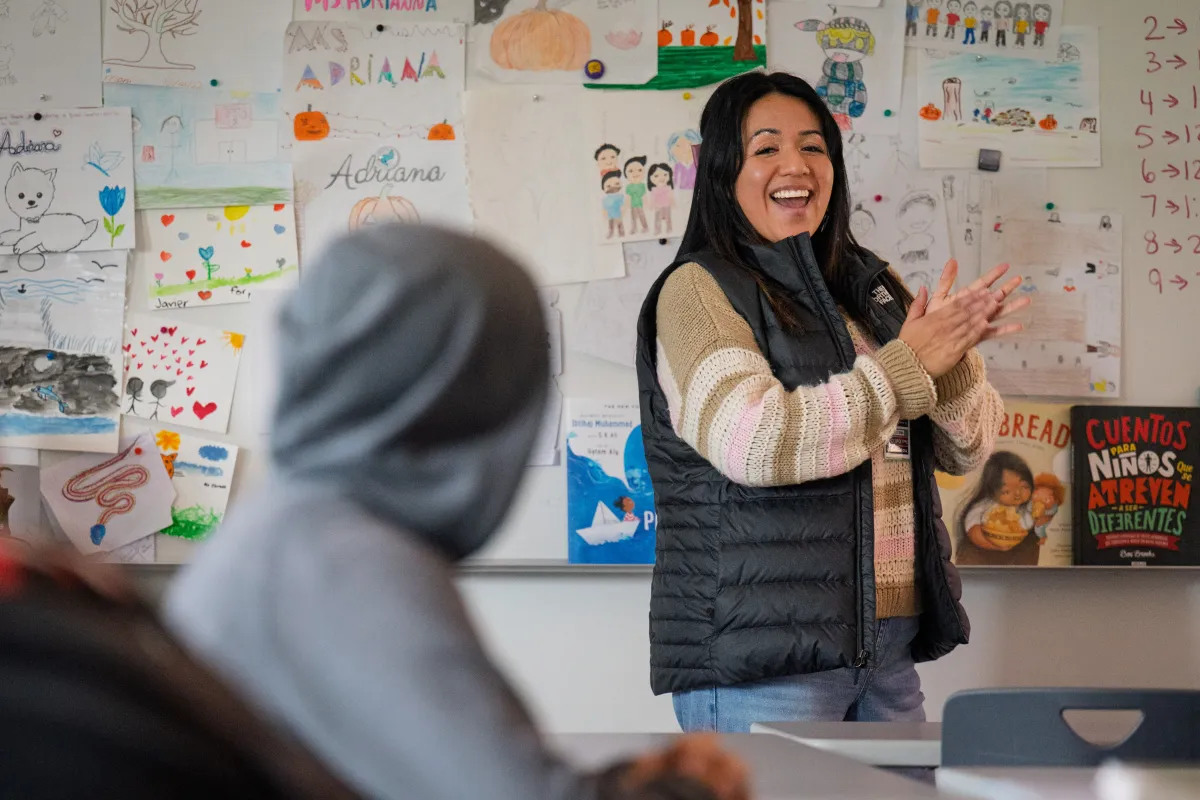
While financial support plays a pivotal role, another hallmark of the EdF program is the community it fosters. Students build lasting relationships with faculty who often guide them from their first year at the UO through the completion of their licensure program and into their early teaching careers.
“It’s such a joy to know a student from their first term all the way through UOTeach,” Schmitke said. “That continuity is something I don’t take for granted.”
That sense of belonging extends beyond graduation. Many alumni return to host student teachers, mentor current undergraduates, and connect with peers at regional education conferences. It is a tight-knit network built on shared values and a shared commitment to schools, families, and children.
“Our students really do feel like they have an academic home,” Schmitke said.
The far-reaching power of this network—and the possibilities it unlocks—amplifies the impact of donor support. When donors help an EdF student stay in school, participate fully in fieldwork, or focus on their coursework rather than juggling extra work hours, that support influences not only that student’s future but the futures of the hundreds of K–12 students they will one day teach.
“In the classroom, I teach my students that scholarships are available at universities and that they themselves are also capable of reaching their goals,” Alvarez said.
Learning by Doing through Field Experience
While coursework equips EdF students with the intellectual tools of teaching, their field experiences help them develop the instincts and confidence they need in real classrooms. Alvarez experienced this firsthand through UOTeach, where hands-on practice prepared her for the realities of her first year in the classroom.
“The program prepared me by giving me hands-on experience with students from diverse backgrounds,” she said. “It helped me think outside the box and be more creative in supporting my students.”
In the EdF program, fieldwork is embedded directly into core Educational Psychology courses, allowing students to step into classrooms early in their academic journey. They don’t just observe, they participate. They run small groups, tutor students, support instruction, and learn how to build meaningful relationships with young people.
“Field experience is almost a text for the class,” Schmitke explained. “Students get to apply the educational psychology framework to what they’re seeing in the field. It helps them ‘read,’ if you will, what they’re seeing in the classrooms.”
By the time they enter their licensure year, EdF students have already developed a nuanced understanding of classroom dynamics—how children learn, how teachers respond, and how school communities function. This preparation sets them apart.
“Our graduates are standouts when they interview for licensure programs,” Schmitke said. “They talk about schools in ways other students simply can’t yet.”
Why Donor Support Matters
For many EdF students, financial pressure is a constant companion. They often take on multiple jobs to pay tuition or cover basic living expenses, leaving less time for the kind of academic exploration that deepens their preparation for teaching.
This is where donor support makes an extraordinary difference.
“Financial support gives students time—time to explore ideas, pursue field experiences, and follow their curiosity,” Schmitke said.
Scholarships help ensure that students can fully participate in what the program offers rather than having to choose between academic success and financial stability. They unlock opportunities that might otherwise be out of reach: study abroad, research projects, community engagement, internships, curriculum development, language study, and more.
“Scholarships are a constant difference maker,” Schmitke said. “Students take that investment seriously, and you can feel the impact every day.”
This was certainly true for Alvarez.
“Receiving the Logan Scholarship was both happiness and a huge stress reliever in paying my tuition,” she said. “Having a scholarship shaped my experience as a student by being able to expand my knowledge, networking, confidence in myself, and passion for education.”
As the EdF program looks to the future, donor support stands at the center of its ability to grow. Additional scholarships would allow more students to take on meaningful extracurriculars and expanded resources would help the program reach more first-year students and strengthen networking for new teachers entering their first classrooms.
“If we could reduce students’ financial burden, they could explore more opportunities,” Schmitke said. “There’s so much possibility.”
And the impact of that investment radiates outward.
“Your investment in our students touches the lives of families and children for years to come,” Schmitke said. “It’s the gift that keeps on giving.”
For Alvarez, the gratitude is deeply personal.
“I would like donors to know that their support meant everything to me,” she said. “They helped me be able to reach my dream of being a teacher.”
To make a difference for future educators and their students, learn more about including the UO in your estate plan or donate to the College of Education today.