


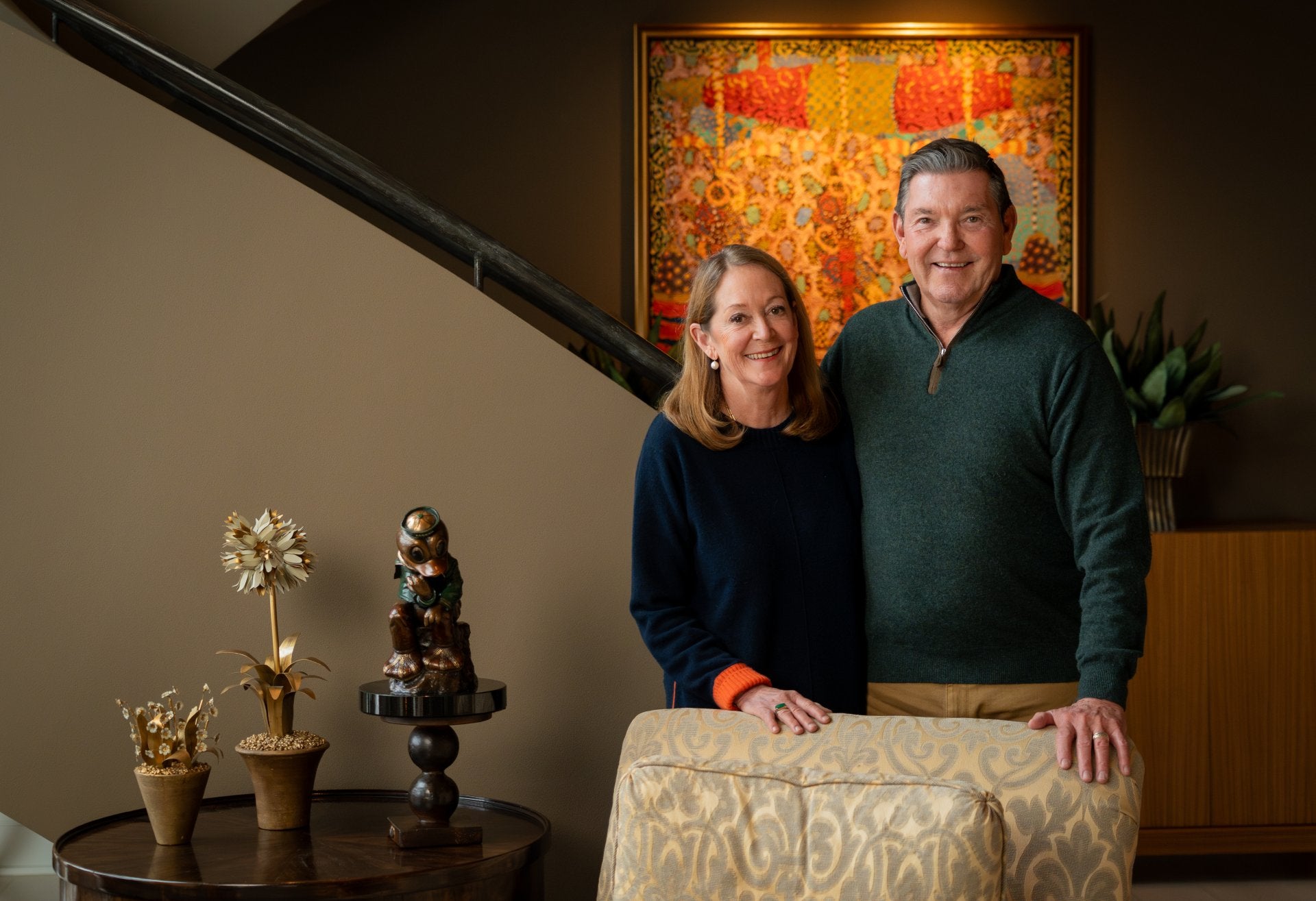
A lifetime helping kids, now shaping children’s behavioral health
After decades creating safe spaces for youth, Ron and Chris Sauer now support the Ballmer Institute’s new building on the UO Portland campus to expand access to life-changing care.
Story by Nicole Slenning, BA ’00 (journalism)
Photos by Andy Nelson
Not long ago, Chris Sauer, BS ’80 (human development and performance), received a phone call that meant more than the caller probably realized.
He asked, “Mama, would you like to come have dinner with me?”
The young man had lived with her and her husband Ron Sauer, BS ’80 (business), in their Northwest Portland home for nearly two years during a time of need and had become part of their family. Now grown and married, he wanted to catch up over burgers.
“It was really fun,” she recalled.
Still, their conversation turned to his childhood.
“He dealt with a lot of change and difficulty during his childhood,” Chris explained. “He’s now in counseling, trying to figure out the circumstances that led him to our house.”
She paused.
“I think had he had something like the Ballmer Institute as a child, it could have helped him understand things much differently. I think it would have given him the tools that he’s looking for now.”
That conviction—that the right support at the right time can change the trajectory of a life—is what drives Chris and Ron’s leadership and investment in the new building for the Ballmer Institute for Children’s Behavioral Health at the University of Oregon’s Portland campus.
A lifetime of opening their doors
The Sauers’ commitment to children didn’t begin with philanthropy. It began at their kitchen table.
“When we were in our early twenties, we soon got involved here in Portland working with organizations serving children and families,” Ron recalled.
But their most meaningful work happened closer to home.
“We had an open-door policy with all the friends of our children,” Chris said. “If they were in crisis or needed a place, our home was their home.”
Over the years, countless young people stayed with them—some for a few nights, others longer. The Sauers coached, mentored, and offered stability and love to these youth when life felt uncertain. They saw that struggle does not discriminate. Some children needed help despite family wealth; others faced visible hardship. What united them was a lack of timely, effective mental health support.
“There’s a massive demand in the Portland area and Oregon for this and virtually no place to go,” Ron said.
An innovative approach to a growing crisis
When the Sauers were introduced to the work underway at the Ballmer Institute, Chris remembers her reaction clearly.
“I was overwhelmed,” she said. “I was bowled over. I was so excited because I’d never seen or heard anything like this.”
The Ballmer Institute has built a first-of-its kind undergraduate training program in child behavioral health. Students complete intensive coursework and more than 700 hours of supervised clinical experience, graduating ready to serve in schools, pediatric primary care, mental health agencies, and community-based organizations.
For Ron, whose career was in growth equities, the model made sense.
“What we like to invest in is something that’s going to solve a problem and grow to a point where they can solve a lot more young people’s problems,” he explained.
While the program currently exists only at the University of Oregon, the goal is to establish it as a national model. Momentum is already building. Nevada has become the first state to adopt the training program and establish a bachelor’s-level credential for this new workforce. As the University of Oregon aims to expand its impact on the world—one of the core goals of the Oregon Rising strategic plan—the Ballmer Institute stands as a program of distinction, leading the way in transforming the future of youth behavioral and mental health.
Ron says they’re excited to attend the commencement ceremony of the program’s first child behavioral health graduates in June 2026, a historic milestone in building a new workforce dedicated to supporting children’s behavioral health.
More than a building
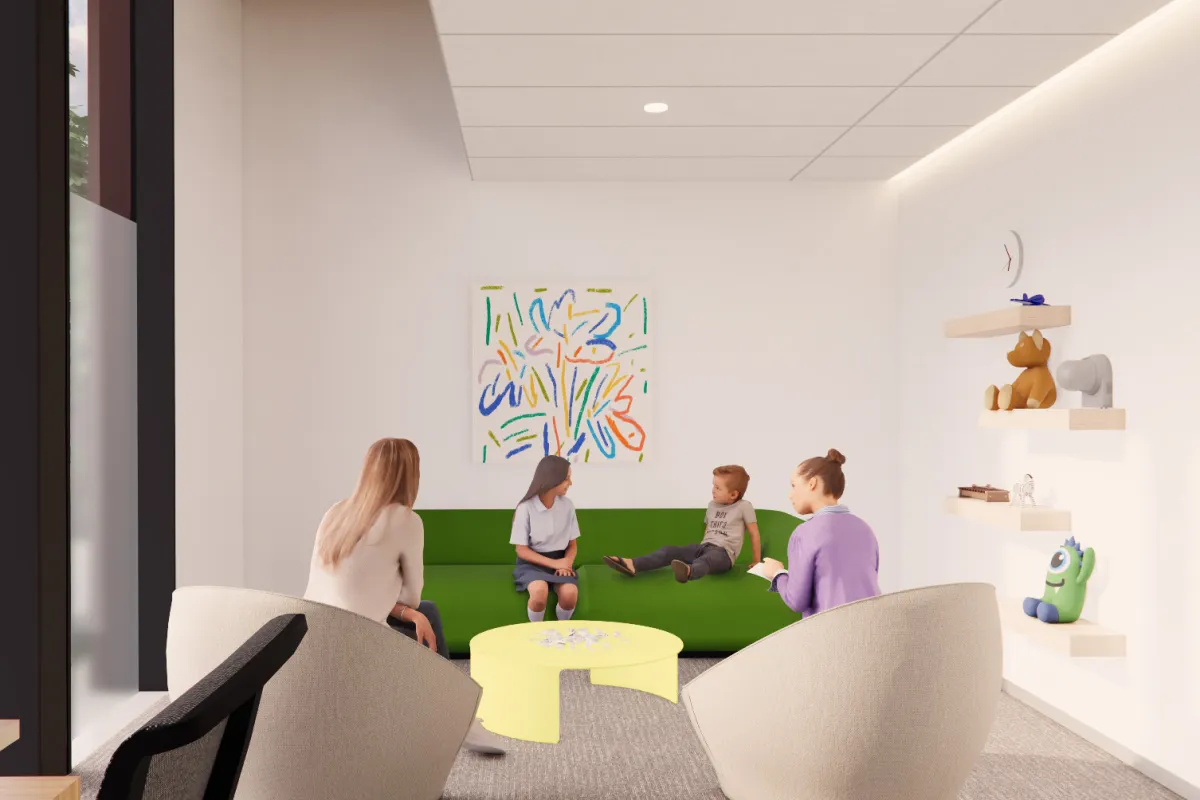
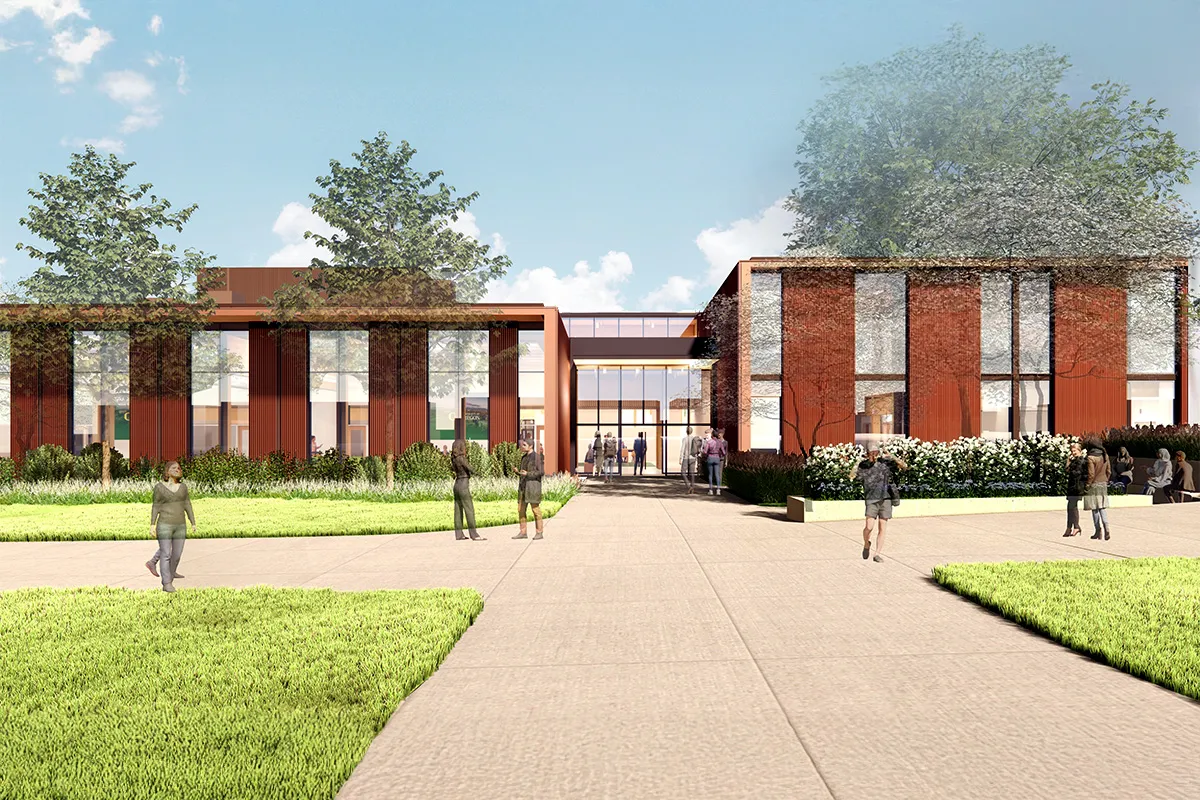
The Child Behavioral Health Building is the most critical next step to increasing the Ballmer Institute’s impact and ability to scale. It will expand training opportunities for students, accelerate research that improves outcomes, and provide behavioral health services to children and families in Portland and across Oregon.
“It’s not just a building,” Ron clarified. “It must be a home, a safe house, with educational facilities—all approachable.”
Children in distress often need somewhere safe to step away, even temporarily, and families need guidance and tools. The Institute aims to provide that and more: an innovation hub that will transform lives, strengthen communities, and establish Oregon as a national leader in children’s behavioral health.
The Sauers met as freshmen at the UO and have remained deeply engaged with the university ever since. Over the years, they have supported transformative initiatives in business and sports product management, helping students launch successful careers. But this gift is different to them.
“Unlike our other gifts, which enhanced careers, this one can save lives, sometimes before it’s too late,” Ron said.
An invitation to give
“The whole spirit of the Ballmer Institute is giving,” Ron said.
Professors give expertise, students give passion, families give trust, and donors give resources to build something sustainable. For the Sauers, the vision is clear: a new generation of skilled professionals equipped to intervene early, before childhood crises become lifelong challenges.
The need is universal, the solution is taking shape, and the opportunity is now—so that fewer adults sit across a dinner table years later wishing help had come sooner.
“I would say, for me, it is our most important gift,” Chris said. “I’m really touched by it and I’m excited to see where it goes and be a part of it.”
The Sauer’s leadership gift to the Child Behavioral Health Building helped launch the Champion’s Circle — a visionary group of early philanthropic leaders who make significant gifts to the project before groundbreaking in June 2026. Champion’s Circle members receive meaningful recognition, access to special events and unique experiences. Just as important, membership signals a powerful vote of confidence in the Ballmer Institute and Oregon’s leadership in youth mental health.
If you would like to join the Sauers in their hopes for a brighter future, make a gift to the Ballmer Institute today. With $53 million in state funding secured, philanthropic support will complete this $83 million project and bring this vital vision to life.
You can also join fellow supporters on June 11 to celebrate the groundbreaking for the Child Behavioral Health Building on the UO Portland campus. Learn more about the event and register here.