


A new approach to supporting youth mental health
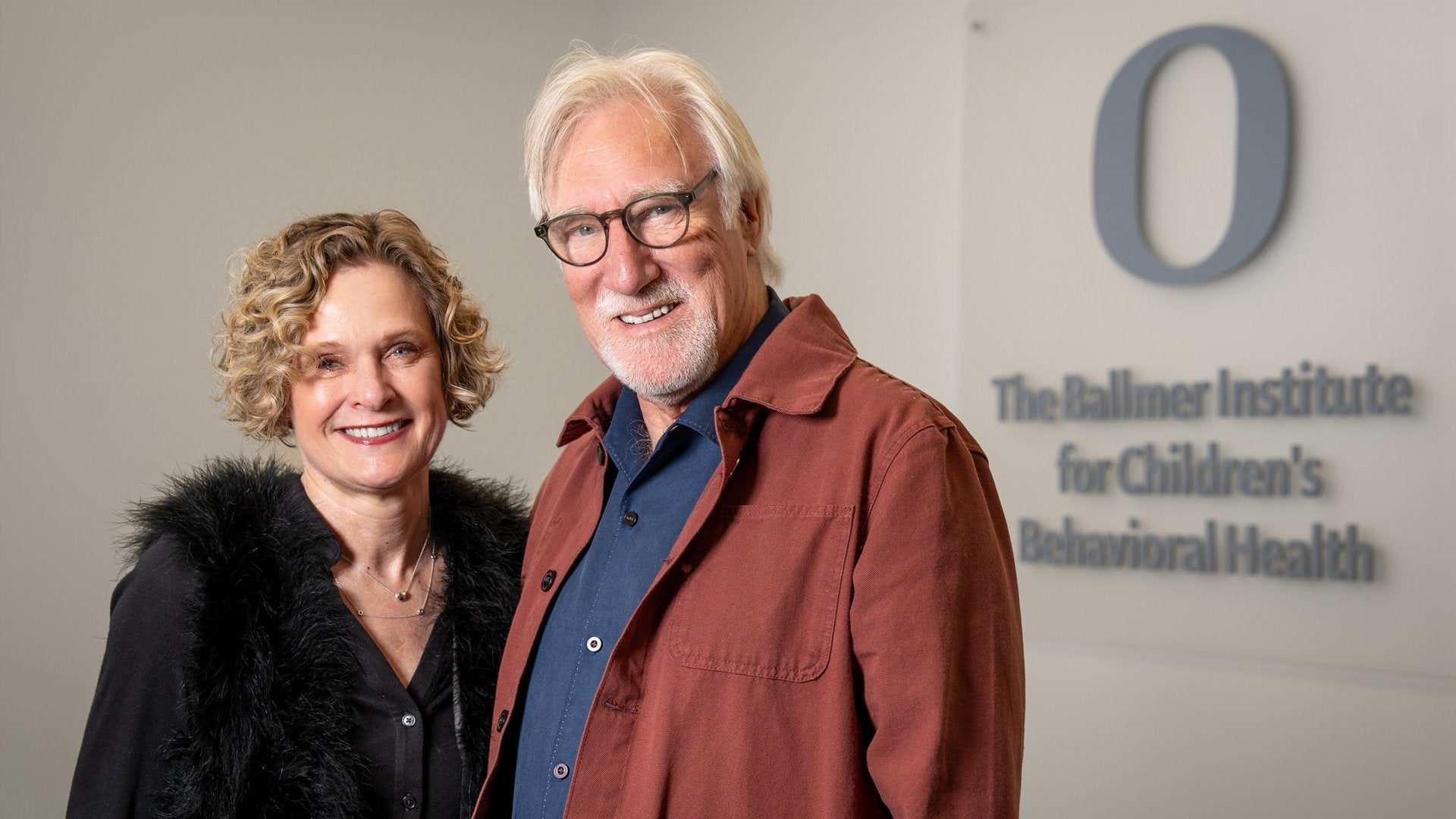
Motivated by their daughter’s experience, Lisa Redekop and Les Koski give to the Ballmer Institute to improve undergraduate training opportunities in children’s behavioral health.
Story by Korrin Bishop
Photos by Andy Nelson
At the start of their daughter Ashley’s high school years, Lisa Redekop and Les Koski moved to Portland, Oregon, from the United Kingdom. Beginning this chapter with a new group of peers can be challenging for any student, but Ashley also soon had to navigate the change during the global pandemic. Alongside their daughter, Lisa and Les gained a deeper understanding of students’ varied learning styles and needs during that time. The experience now drives their $100,000 pledge to the University of Oregon’s Ballmer Institute for Children’s Behavioral Health.
“It was heartbreaking to the two of us because it was sort of this growing challenge for Ashley,” Lisa reflected. “Not only was she not getting socialization during high school like you normally do in those formative years, but she was also put at a disadvantage because she had such a late diagnosis of ADHD. There wasn’t enough information and understanding of what the impact was and how you intervene.”
Ashley’s small high school, Lisa came to realize, lacked the resources needed to fully support neurodiverse students. Although Ashley was accepted to several East Coast colleges, the family decided it was best for her to stay closer to home as she worked to build the study habits and skills needed to succeed in a traditional academic setting. After a year and a half at the University of Oregon, Ashley struggled to keep up and ultimately stepped away, later enrolling in a few classes at Lane Community College.
“That’s why we started getting educated about the Ballmer Institute,” Lisa said. “It felt really personal and deeply meaningful to us because I can’t even imagine how our lives would be different if Ashley had a whole lot more help earlier on.”
Les observed that while schools often provide help with specific tasks when a student is struggling, there is limited capacity to explore the underlying reasons behind those challenges.
“Seeing the Ballmer Institute come up on the horizon with a process and a methodology to help counselors and schools identify children who are struggling earlier on rang a huge bell for us. This is something that we could support because it would have made a big difference to our lives and to Ashley’s life.”–Les Koski
Supporting the Ballmer Bound Portland Internship Experience
The Ballmer Institute is transforming the youth behavioral health workforce through a groundbreaking new undergraduate program that equips students to enter the field sooner with the skills and experience to make an immediate difference.
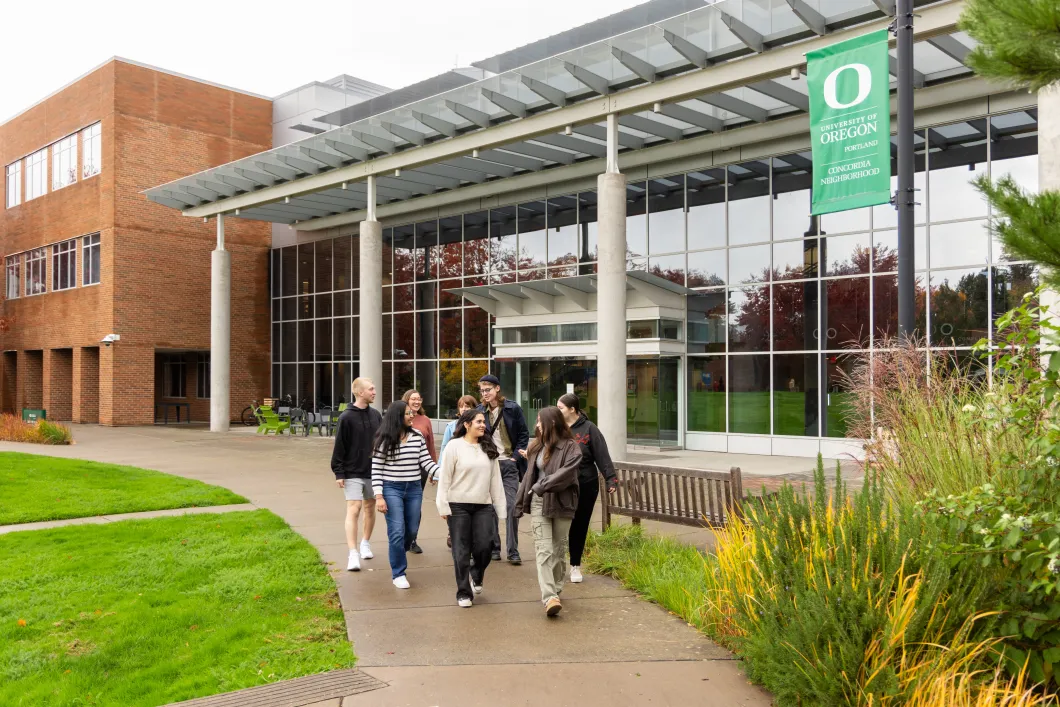
Students spend their first two years at the University of Oregon’s Eugene campus before transitioning to UO Portland for their final two years, a shift that can feel daunting without early connections to the program and community. At the same time, students consistently express a desire for meaningful, real-world exposure to behavioral health earlier in their college journey. Meeting that need is key to helping more students say “yes” to the child behavioral health major—and to building the workforce Oregon urgently needs.
To expand these opportunities, Lisa and Les are directing their gift to the Ballmer Bound Portland Internship Experience. This program offers first- and second-year pre-majors a structured, Portland-based summer experience with youth- and family-serving organizations.
“The ability to get out in the community and really explore and test and be with kids is so important. And sometimes it’s easier for somebody who is college-aged to connect with a younger child than it is for an older adult.”
–Lisa Redekop
This early applied learning opportunity allows students to:
- Engage in transformative professional development opportunities
- Build meaningful and lasting connections within the community
- Gain foundational knowledge of the youth behavioral health field
- Bridge the transition from Eugene to Portland by helping students establish roots, networks, and familiarity with the city
Les and Lisa’s gift will fully fund two students annually for the next five summers. The first $20,000 of their donation was used as a matching gift for a DuckFunder crowdfunding campaign. Their investment ultimately inspired other donors to contribute more than $31,000 in additional funding for the program. This means that five UO students will be able to participate in the 2026 Ballmer Bound summer cohort without financial constraints.
“We wanted to provide financial support for students who may be moving to Portland for the first time, who may have never lived in a city of this size before, and who may not have the means to move to Portland,” Lisa said.
She and Les have met some of the early Ballmer Institute students and have been impressed by their enthusiasm, passion, and drive to make a difference in the community. Les sees the Ballmer Bound Portland Internship Experience as a powerful way of weaving the UO’s mission beyond the campus environment.
“If you bring elements of colleges into the urban setting, and people experience those students and what the colleges do, then you’re starting to integrate education into society, with a meaningful contribution towards how our cities grow,” he said.
Looking toward the future
Les and Lisa look forward to seeing the first few Ballmer Institute cohorts graduate and to following the impact these students will have on the children they serve. They find it promising that other universities and institutions are beginning to take notice of this model and hope it can drive broader changes.
“I’ve seen estimates that perhaps 20 percent of children nowadays are neurodivergent in some form or other, but we have basically a one-size-fits-all education system,” Les said. “Hopefully, when programs like the Ballmer Institute have more impact, and school counselors, principals, and school boards start to see the extent to which children can be helped in different ways, we can adapt the education system to be more accommodating.”
When considering a gift to the Ballmer Institute, Lisa encourages others to reflect on the untapped talent and potential that may be lost without better support for neurodivergent students and the opportunity to help them channel their unique strengths.
“Talk to people who are neurodivergent in your life about the difficulty they’ve had over the years with academics, with learning, with school, whatever it is, and maybe the lightbulbs will start to go off,” she said. “The straight and narrow path doesn’t work for everybody.”
To join Lisa and Les in supporting the next generation of child behavioral health professionals—and ensuring children and families have access to the care they need to flourish—make a gift to the Ballmer Institute today.