


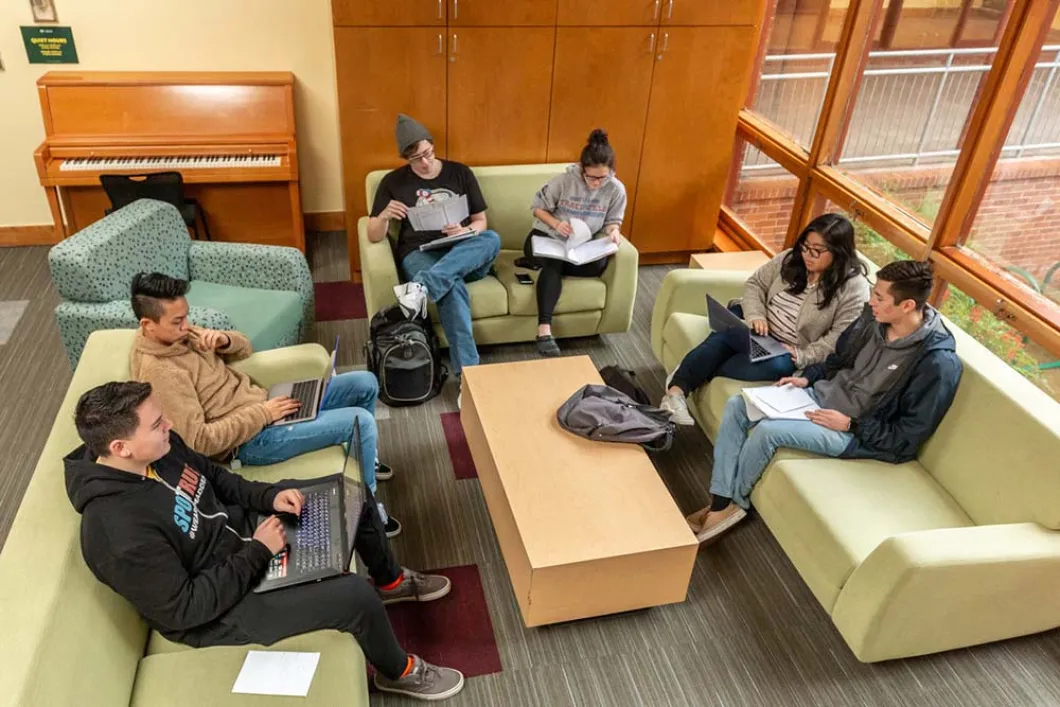
After scholars arrive on campus, student success initiatives help keep them here with programs that extend learning beyond the classroom. These student engagement activities provide opportunities for leadership and personal growth, and they are integrated with academics.Approximately half of our students participate in a first-year experience program, and these experiences are essential in helping students feel like they belong at the UO, both academically and socially.Experiential learning provides challenging, engaging opportunities where the “right” answers are not as cut-and-dried as what you’ll find in a textbook. These engaging programs require communication, creativity, and problem solving. These programs also improve retention rates. When students are involved, engaged, and part of a community, they are more likely to stay in college and earn a degree on time.
Student Success and Excellence Fund
This fund provides a flexible source of financial support for retention programs. It can be used for student support services, and to promote best practices in UO coursework and experiential learning activities. Discretionary resources like these are crucial to student success. This flexibility enables the university to respond quickly to change, overcome unanticipated obstacles, and make the most of new opportunities. The UO committee that allocates these resources gives priority to initiatives that directly support students who identify as first-generation, low income, or underrepresented populations.
Give to the Student Success and Excellence Fund
First Year Interest Groups (FIGs)
FIGs give students opportunities to get to know faculty members and other students, take an academic deep dive, and have fun. More than half of the UO’s eligible first-year students participate in FIGs. Scholars in FIGs join small groups focused on academic themes, earning credits while building community and going on field trips relevant to their coursework. For example, the Animal Behavior FIG takes a trip to the Portland Zoo. And students in the Theater Now! FIG attend live performances.
Academic Residential Communities (ARCs)
For students living in University Housing, ARCs offer opportunities to live and learn with other students who share their passions, interests, and identities. Students take classes together, connecting with faculty members and advisors who provide social and academic support. In many cases, the residence hall associated with the ARC includes special resources, such as a design studio or music practice room. Students in these communities participate in activities relevant to their interests.
They go on field trips, attend guest presentations, watch (or give) performances, and more. Examples of ARCs include: Women in Science and Math, Umoja Black Scholars, Latinx Scholars.